
 FAST WORLDWIDE SHIPPING


The Fresh Air Double Plus combines several air-treatment functions in a single compact appliance. With a manufacturer-specified coverage area of up to 3,500 square feet, it is designed to support indoor air care across larger living and working environments. Its combination of filtration and supplementary treatment technologies provides an alternative to using several separate devices for different air-quality needs.
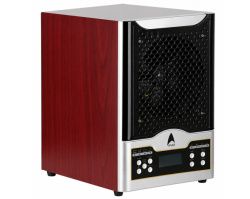
Atlas Fresh Air Triple Plus
SALE PRICE:
$579 99
Product Description
Enhanced Air Treatment with Dual Purification and HEPA Filtration
Updated with programmable operating schedules for TriOxygen technology and independent timer settings for the entire unit.
Manufacturer-Reported Bacteria and Virus Effectiveness: >99%
Manufacturer-Reported PM2.5 Particle Removal Efficiency: >99%
A Fresher Home Starts with Better Air
Experience a fresh, comfortable indoor environment with the EcoQuest Fresh Air Double Plus, a digital air-treatment system that combines multiple technologies in one appliance. Ozone generation, ultraviolet light, activated charcoal, HEPA filtration, and ionization work through different mechanisms to address airborne particles, household odors, and selected airborne contaminants. Designed for spaces up to 3,500 square feet according to the manufacturer's coverage specification, the unit features an LCD control panel, remote operation, and a distinctive black finish that complements a variety of interiors.
Designed to support everyday indoor air care, the Fresh Air Double Plus offers additional functions for environments affected by smoke, lingering household odors, and stale air. Programmable operation and adjustable settings provide flexibility when choosing how and when to use the appliance. For ozone-generating operation, always follow the manufacturer's safety instructions and use only under approved conditions.
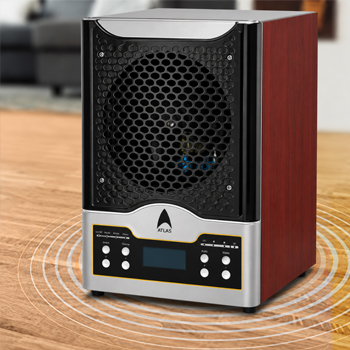
Broad Air Treatment with Less Equipment
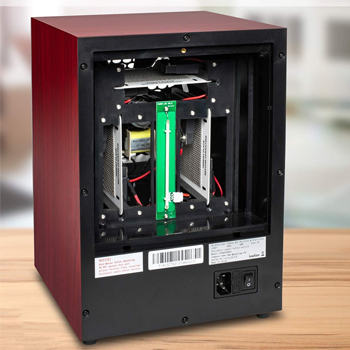
TriOxygen Technology for Odor Treatment
The TriOxygen system uses an oxidation-based air-treatment process involving activated oxygen. This technology is intended to help address selected odor-causing compounds and other substances that react with ozone. Its performance depends on operating conditions, contaminant levels, and the characteristics of the treated environment.
Programmable Settings and Remote Control
The LCD interface, remote control, and timer functions make it easier to configure the unit for different operating schedules. Users can select settings and program operation according to the manufacturer's instructions. Ozone-generating modes must be used only under the specified safety conditions, including any required restrictions on occupancy.
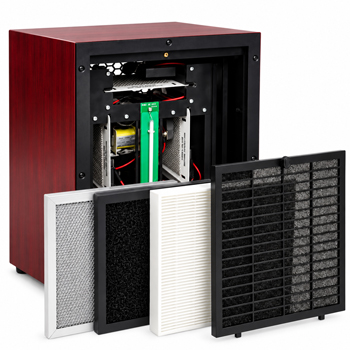
Multi-Stage Filtration and Air Treatment
The Fresh Air Double Plus combines several technologies intended to address different aspects of indoor air quality. Its treatment system includes HEPA filtration, ultraviolet light, a titanium dioxide (TiO2) photocatalytic component, activated charcoal, ionization, and ozone generation. These components have different functions, from capturing airborne particles to facilitating reactions involving selected chemical compounds and odors.

For Everyday Indoor Environments
- Homes and Living Areas
- Offices and Break Rooms
- Areas Affected by Water Damage
- Fire- and Smoke-Affected Areas
- Recently Painted or Wallpapered Rooms
- Newly Renovated Interiors
- Buildings with Persistent Indoor Air Quality Concerns

For a Variety of Indoor Settings
- Designated Smoking and Vaping Areas
- Environments with High Pollen Levels
- Rooms with New Carpeting
- Recently Furnished Rooms
- Homes with Cats and Dogs
- Kitchens and Food Preparation Areas
- Bathrooms and Utility Areas

Additional Applications
- Attics and Basements
- Laundry Rooms
- Stables and Aviaries
- Locker Rooms
- Gyms and Workout Areas
- Sheds and Garages
TECHNOLOGY
PHOTOCATALYTIC OXIDATION (PCO)
Photocatalytic oxidation is an air-treatment process that uses light and a catalyst to promote chemical reactions involving certain contaminants. In systems that incorporate titanium dioxide (TiO2), ultraviolet light activates the catalyst and facilitates reactions with selected organic compounds. Under suitable conditions, these reactions can transform some substances into simpler compounds, including water and carbon dioxide, along with other reaction products.
PCO technology is intended to complement mechanical filtration by addressing certain compounds that may not be captured in the same way as airborne particles. Actual performance depends on the catalyst, light intensity, airflow, exposure time, and the chemical composition of the contaminants.
HYDROXYL RADICALS
Hydroxyl radicals are highly reactive molecules that occur naturally in the atmosphere through chemical reactions involving sunlight, water vapor, and other atmospheric constituents. They play an important role in the natural breakdown of various airborne compounds and help influence atmospheric chemistry.
Because hydroxyl radicals react rapidly with many substances, they have also been studied for applications involving air treatment and contaminant oxidation. Their behavior and effectiveness depend on how they are generated and on the surrounding chemical conditions. The presence of hydroxyl-related processes does not, by itself, guarantee the removal of a particular contaminant or a specific improvement in indoor air quality.
SUPEROXIDES
Superoxide is a reactive oxygen species involved in a range of chemical and biological processes. Reactive oxygen species can interact with biological structures under certain conditions, although their effects depend on the specific species, concentration, exposure, and surrounding environment.
- Reactive oxygen species can interact with lipid structures in biological membranes.
- Oxidative reactions may affect proteins and other essential cellular components.
- The resulting effects depend on the organism, exposure conditions, and the reactive species involved.
These general chemical mechanisms should not be interpreted as proof that a particular air purifier inactivates all viruses or bacteria at a specified rate.
HYDROGEN PEROXIDE
Hydrogen peroxide (H2O2) is a compound made up of hydrogen and oxygen. Its additional oxygen atom, compared with water (H2O), gives it oxidizing properties that allow it to participate in chemical reactions with other substances.
Hydrogen peroxide can take part in reactions that generate highly reactive hydroxyl radicals. Under suitable conditions, these reactions may affect cellular membranes, proteins, DNA, and other biological structures. Hydrogen peroxide is therefore used in certain disinfection and oxidation applications. Its effectiveness depends on concentration, contact time, the target organism, and the conditions of use.
The discussion of hydrogen peroxide chemistry describes a general oxidation mechanism and should not be taken as confirmation that the Fresh Air Double Plus generates a particular hydrogen peroxide concentration or achieves a specific disinfection result.
TRIOXYGEN TECHNOLOGY
TriOxygen is the product's term for its activated-oxygen technology, which involves ozone (O3), a reactive form of oxygen. Ozone can react with certain odor-causing substances and other compounds through oxidation. As ozone reacts, it can be converted into other substances, but the reaction products depend on the materials present and the operating environment.
- Ozone can react with selected compounds that contribute to unwanted odors.
- Oxidation may alter certain organic substances present in the treated environment.
- Ozone-based treatment is different from mechanical filtration, which physically captures particles.
- The resulting air quality depends on the operating conditions, the substances present, and appropriate ventilation and safety measures.
Ozone is a respiratory irritant and can be harmful when inhaled. Do not operate ozone-generating functions in occupied spaces unless the manufacturer confirms that the specific operating conditions are safe and compliant with applicable requirements. Follow all product instructions and safety precautions.
IONIZATION
Ionization introduces electrically charged ions into the air. Negative ions can interact with suspended particles, potentially causing some particles to cluster or settle on nearby surfaces. This process may change the distribution of airborne particles, but it does not necessarily remove them from the indoor environment.
Ionization is designed to complement other air-treatment methods rather than replace mechanical filtration or routine cleaning. Its actual effect depends on the ion output, room conditions, particle characteristics, and the design of the appliance.
- May influence the movement and settling of certain airborne particles.
- Can complement other air-treatment technologies.
- Does not eliminate the need for regular dust removal and surface cleaning.
- Should not be assumed to provide medical, immune-system, sleep, or mood benefits without reliable supporting evidence.
ULTRAVIOLET LIGHT
Ultraviolet light is used in certain air-treatment and disinfection systems because sufficient exposure at an appropriate wavelength can damage the genetic material of susceptible microorganisms. The result depends on the wavelength, intensity, exposure time, distance, and the organism being targeted.
- UV-C radiation is studied and used in applications involving the inactivation of certain microorganisms.
- Research has examined the effects of specific UV-C wavelengths on airborne viruses under controlled conditions.
- Some studies have reported substantial reductions in viable microorganisms following defined exposure conditions.
- UV-C exposure can also pose risks to eyes and skin, depending on the wavelength and exposure conditions.
Results from a particular laboratory study cannot automatically be applied to every UV lamp or air purifier. The presence of a UV lamp does not guarantee a specific reduction in viruses or bacteria. Follow the manufacturer's safety instructions and do not expose people or pets to direct UV-C radiation.
HEPA FILTRATION
HEPA stands for high-efficiency particulate air. HEPA filters use a dense arrangement of fibers to capture particles as air passes through the filter material. Depending on the filter specification and test conditions, this technology can capture common airborne particles such as dust, pollen, and pet dander, as well as many particles carrying biological material.
HEPA filtration performance is determined by factors including particle size, airflow, filter integrity, and the applicable testing standard. A filter's ability to capture particles under controlled test conditions does not necessarily indicate the same percentage reduction throughout an entire room.
Mechanical filtration can help reduce airborne particulate matter when air is drawn through an appropriately rated filter. It does not, on its own, establish that every virus, bacterium, or other microorganism has been inactivated. Overall results also depend on the appliance's airflow, room size, filter condition, and continued maintenance.
ACTIVATED CHARCOAL
Activated charcoal, also called activated carbon, is a carbon-based material processed to create a highly porous structure. Its extensive internal surface area allows it to adsorb certain molecules from air and other fluids. Adsorption occurs when substances accumulate on the material's surface rather than being captured solely by mechanical filtration.
Activated carbon is commonly used in odor-control and filtration applications because it can retain selected gaseous compounds. Its performance varies according to the type and quantity of carbon, the properties of the contaminant, humidity, airflow, and contact time. The material has a finite adsorption capacity and may require maintenance or replacement according to the manufacturer's recommendations.